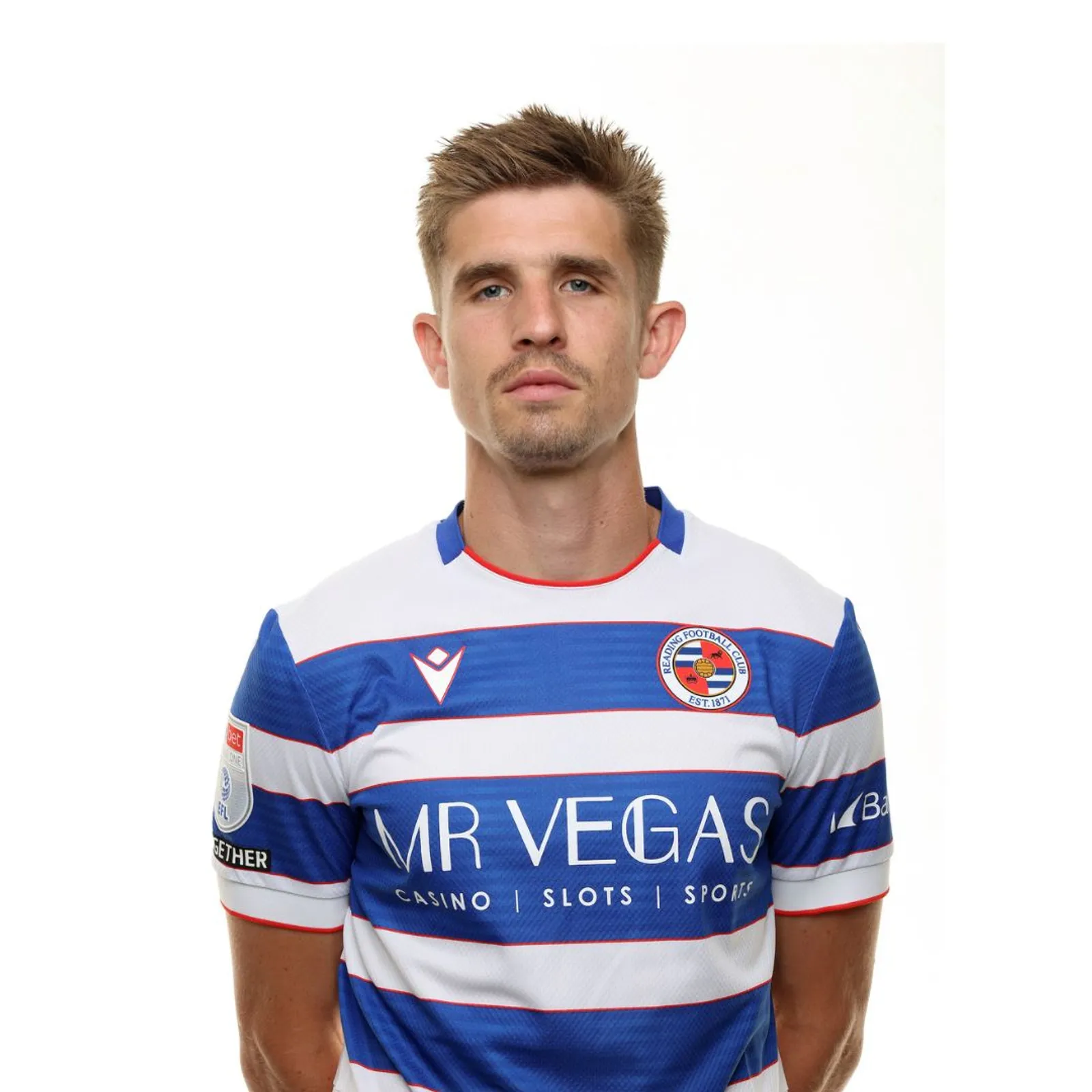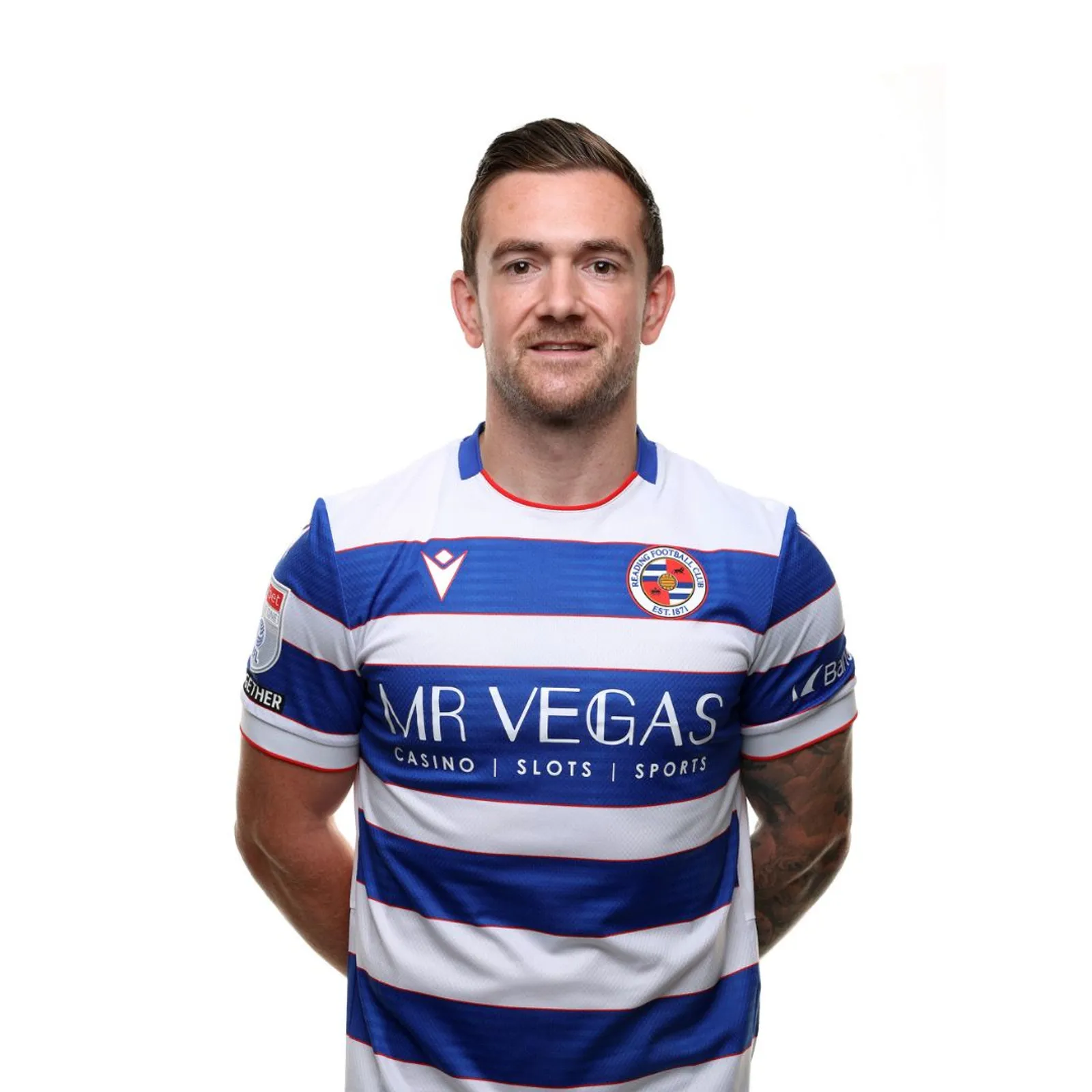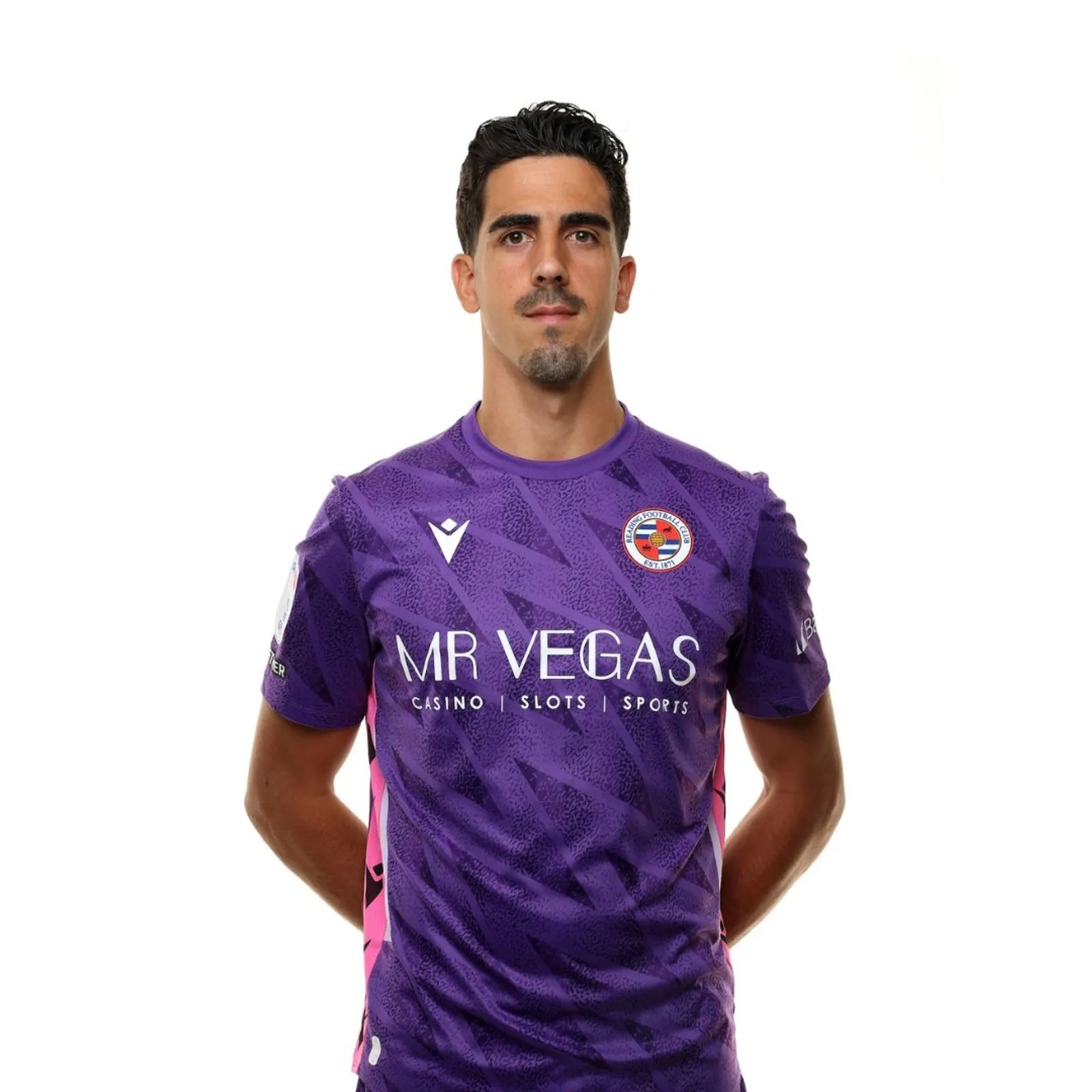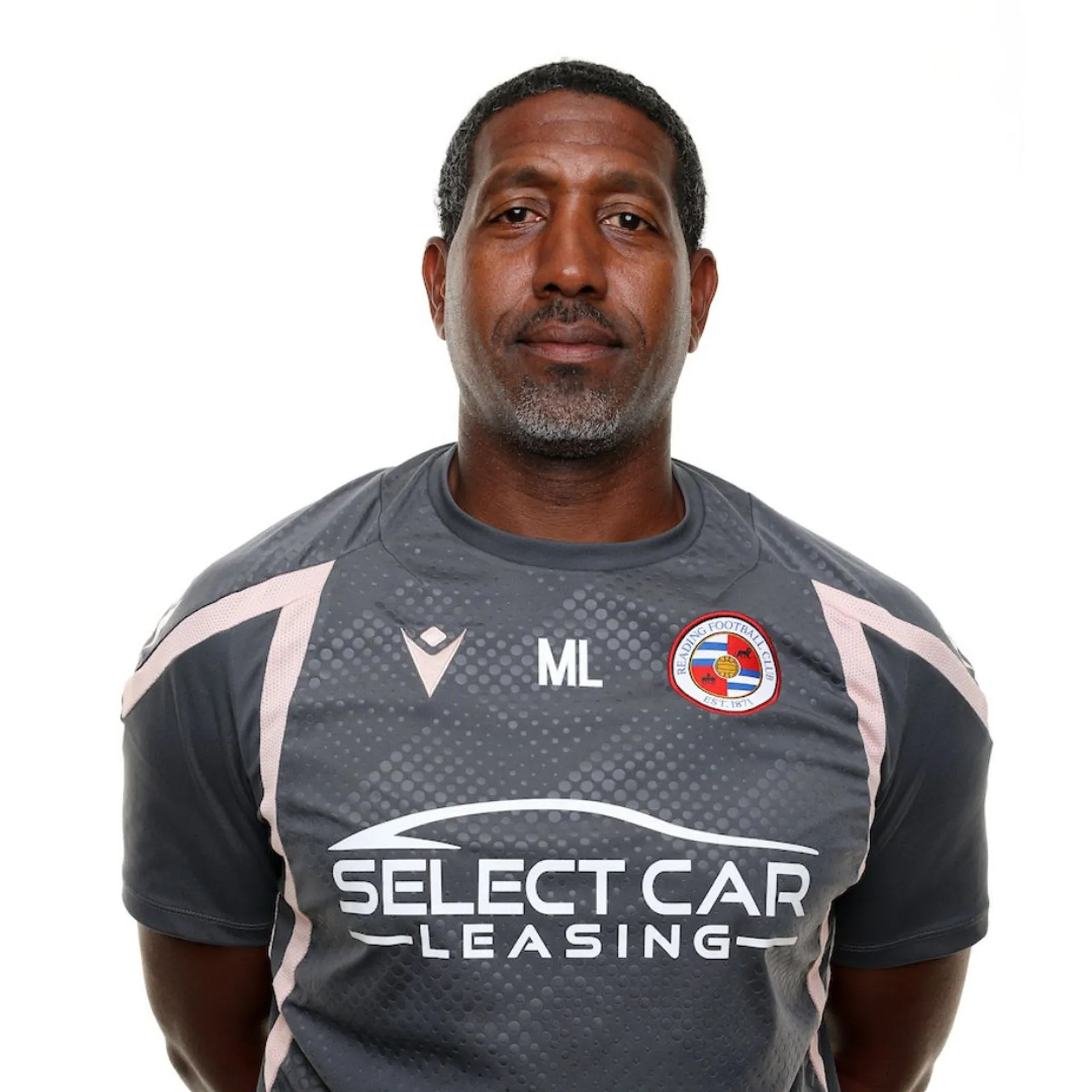
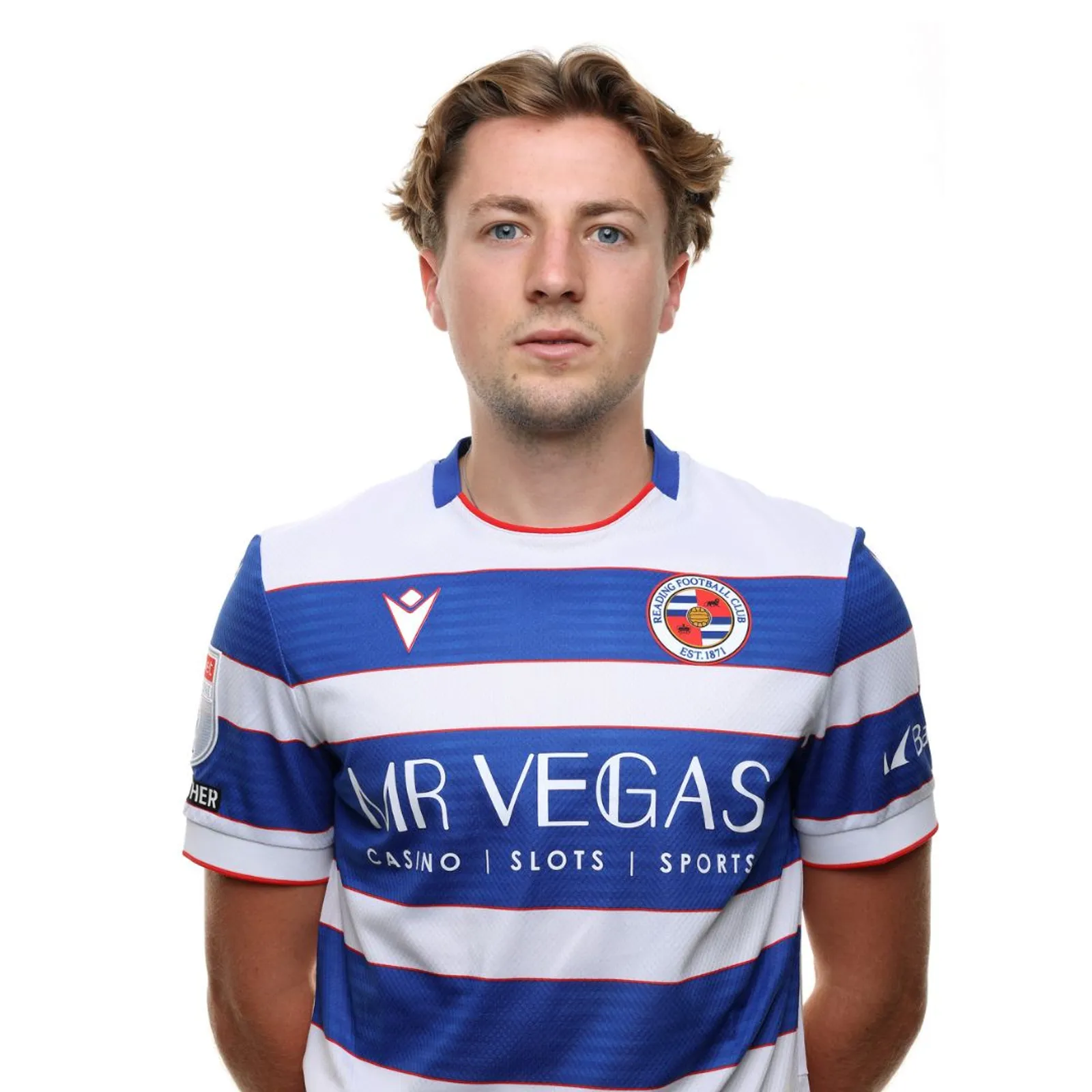
Mikele Leigertwood

Mikele Leigertwood

ASSISTANT

SEASON

EFL League One

Mikele Leigertwood

Mikele Leigertwood

ASSISTANT

Founded 1871 · Reading · EFL League One

Reading

Reading Football Club ( RED-ing) is a professional football club based in Reading, Berkshire, England.

Founded
1871
Ground
Madejski Stadium
Capacity
24,161
Manager
Mikele Leigertwood
FOUNDED 1871GROUND Madejski StadiumCAPACITY 24,161LEAGUE EFL League OneMANAGER Mikele LeigertwoodOWNED BY Supporters

THE CLUB

About Reading

Where the club came from, where it plays and how it got here.

Reading Football Club ( RED-ing) is a professional football club based in Reading, Berkshire, England. They compete in EFL League One, the third level of the English football league system. They play their home matches at the Select Car Leasing Stadium in the RG2 area of Reading.

Reading are nicknamed The Royals after the Royal County of Berkshire, and were previously known as The Biscuitmen, due to the town's association with biscuit maker Huntley & Palmers. Established in 1871, the club is one of the oldest teams in England, but did not join The Football League until 1920, and first played in the top tier of English football league system in the 2006–07 season. The club competed in the 2012–13 Premier League season, having gained promotion at the end of the 2011–12 season after winning the Championship, but were relegated after just one season back in the top flight.

Reading were formed on 25 December 1871, following a public meeting at the Bridge Street Rooms organised by Joseph Edward Sydenham, who would go on to be club secretary. The early matches were played at Reading Recreation Ground, and later the club held fixtures at Reading Cricket Ground, Coley Recreation Ground and Caversham Cricket Ground. The switch to professionalism in 1895 resulted in the need for a bigger ground and, to this end, the club moved again, to the purpose-built Elm Park on 5 September 1896. In 1913, Reading had a successful tour of Italy, prompting the leading sports newspaper Corriere della Sera to write, "Without doubt, Reading FC are the finest foreign team seen in Italy". Attilio Fresia moved to Reading as a result of the tour, becoming the first Italian to play in English football.

Reading were elected to the Football League Third Division South of the Football League in 1920. The club were promoted to the Second Division, following a Third Division South title win in 1926. Reading's best performance in the FA Cup came in 1926–27 when they lost to eventual winners Cardiff City at Wolverhampton in the semi-final, a placement the club would not match again until 2015, when they lost to holders Arsenal in the semi-final. The attendance at the 1–0 victory over Brentford in the fifth round set a new attendance record for Elm Park, at 33,042 people. This remains the highest attendance at a Reading home match. Reading lost their place in the Second Division in May 1931, and remained in Third Division South until the outbreak of World War II. The club won the Southern Section Cup, beating Bristol City in the two-legged final in 1938, and when taking part in the regional London War League and Cup competitions, gained another honour by beating Brentford in the London War Cup Final of 1941 by 3–2 at Stamford Bridge.

When League football resumed after the war, Reading quickly came to prominence once again. The club's record victory, 10–2 versus Crystal Palace, was recorded in September 1946, and Reading twice finished runners-up in the Third (South), in 1948–49 and 1951–52, but they were denied a return to Division Two as only the champions were promoted. Reading were relegated to the fourth tier of English football for the first time in the 1971–72 season. A return to the Third Division was achieved, following a third-placed finish in 1975–76, but the club suffered immediate relegation. The 1978–79 season saw Reading win the Fourth Division to win promotion back to the Third Division.

Relegation was suffered in 1982–83. Towards the end of that season, Oxford United chairman Robert Maxwell announced that he had completed a deal to merge Oxford and Reading into a single club – Thames Valley Royals. Maxwell claimed that both clubs were on the verge of bankruptcy and having a united team was required for the Thames Valley region to retain a Football League club. The proposed amalgamation was prevented by the actions of Roy Tranter, a Reading director, and Roger Smee, a former Reading player. Smee disputed the legitimacy of the controlling interest in Reading held by the three board members that supported the merger plan. Tranter launched a legal challenge to the sale of certain shares on 22 April 1983. The supporters of the plan allies resigned under pressure from the rest of the Reading board in May 1983. At an extraordinary shareholders' meeting in July, Smee took over the club to end the amalgamation plans.

Following every Reading fixture?

Team news, line-ups and full-time reaction from Madejski Stadium.

See our predictions

Club records

    PLAYERS

    The Reading squad

    Registered players with appearances and goals across all competitions.

    Midfielders

    Andy Rinomhota

    Andy Rinomhota

    Apps
    0
    Goals
    Charlie Savage

    Charlie Savage

    Apps
    0
    Goals
    Daniel Kyerewaa

    Daniel Kyerewaa

    Apps
    0
    Goals
    Lewis Wing

    Lewis Wing

    Apps
    0
    Goals
    Liam Fraser

    Liam Fraser

    Apps
    0
    Goals

    Defenders

    Haydon Roberts

    Haydon Roberts

    Apps
    0
    Goals
    Jeriel Dorsett

    Jeriel Dorsett

    Apps
    0
    Goals
    Kelvin Abrefa

    Kelvin Abrefa

    Apps
    0
    Goals
    Udoka Godwin Malife

    Udoka Godwin Malife

    Apps
    0
    Goals

    Forwards

    Jack Marriott

    Jack Marriott

    Apps
    0
    Goals
    Jacob Brown

    Jacob Brown

    Apps
    0
    Goals
    Kyreece Lisbie

    Kyreece Lisbie

    Apps
    0
    Goals

    Goalkeepers

    Jack Stevens

    Jack Stevens

    Apps
    0
    Goals
    Joel Dinis Castro Pereira

    Joel Dinis Castro Pereira

    Apps
    0
    Goals
    SQUAD BY AGE
      The squad after a win at Plough Lane
      The squad after a win at Plough Lane

      THE GROUND

      Madejski Stadium

      Capacity, layout and how to reach Madejski Stadium on a matchday.

      North Stand South Stand West Stand East Stand

      The South Stand was completed with money raised from supporters through a bond issue, taking the ground to its present capacity.

      THE GROUND
      24,161SEATS
      Opened
      Address
      Reading
      Pitch
      Grass, 105 × 68 m
      HOME ATTENDANCE
      GETTING THERE

      HISTORY

      The history of Reading

      The moments that shaped the club, in the order they happened.

      Six turning points

      1. 1871

        Reading F.C. formed on 25 December following a public meeting at the Bridge Street Rooms, organised by Joseph Edward Sydenham.

      2. 1896

        The club moved to the purpose-built Elm Park on 5 September, having turned professional the previous year.

      3. 1913

        A tour of Italy prompted Corriere della Sera to call Reading the finest foreign team seen in the country; Attilio Fresia followed, becoming the first Italian to play in English football.

      4. 1920

        Reading were elected to the Football League Third Division South, nearly five decades after the club's foundation.

      5. 1983

        A proposed merger with Oxford United into Thames Valley Royals was defeated through legal and shareholder action led by director Roy Tranter and former player Roger Smee.

      6. 2006

        Reading competed in the top tier of the English football league system for the first time, in the 2006–07 season.

      RIVALRIES

      Rivalries

      The fixtures that carry more weight than the league table suggests.

      Oxford United

      The proposed 1983 merger into Thames Valley Royals, resisted fiercely by Reading supporters and officials, ensured that any subsequent fixture between the two clubs carries particular historical weight.

      QUESTIONS

      Questions supporters ask

      Short answers on the club, the ground and getting there.

      Why are Reading called The Royals?

      The nickname derives from Berkshire's designation as the Royal County.

      What was Reading's earlier nickname, and where did it come from?

      The club were formerly known as The Biscuitmen, a reference to the town's association with biscuit manufacturer Huntley & Palmers.

      What is the highest attendance ever recorded at a Reading home match?

      The record is 33,042, set during a fifth-round FA Cup victory over Brentford at Elm Park.

      What is Reading's record victory?

      Reading's record victory is a 10–2 win against Crystal Palace, recorded in September 1946.

      Have Reading ever reached the FA Cup semi-final?

      Yes, on two occasions: in 1926–27, when they lost to eventual winners Cardiff City at Wolverhampton, and in 2015, when they were beaten by holders Arsenal.

      See our predictions

      Standings, results and fixtures across the division, updated after every round.

      See our predictions